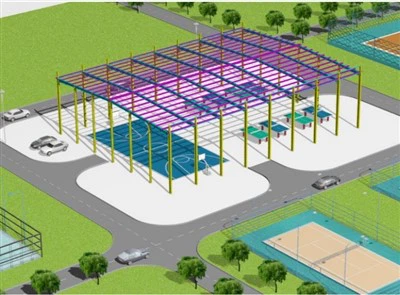
As a supplier of pre engineered warehouses, I understand the critical importance of fire protection in these structures. Pre engineered warehouses are widely used for various storage and industrial purposes, and ensuring their fire safety is not only a legal requirement but also a moral obligation to protect lives and property. In this blog, I will discuss the key fire - protection measures for pre engineered warehouses.
1. Fire - Resistant Building Materials
One of the fundamental steps in fire protection for pre engineered warehouses is the use of fire - resistant building materials. For the structural components, such as steel frames, they can be treated with fire - retardant coatings. These coatings can significantly increase the time it takes for the steel to lose its structural integrity during a fire.
When it comes to the roofing and wall panels, fire - resistant materials should be selected. For example, some panels are made of materials that have a high fire - rating, which can prevent the spread of fire from the outside or inside of the warehouse. These materials act as a barrier, reducing the risk of fire spreading quickly through the building envelope.
The choice of insulation materials also plays a crucial role. Insulation that is fire - resistant can help to slow down the heat transfer during a fire, protecting the structural components and the stored goods. It can prevent the fire from quickly reaching dangerous temperatures and causing widespread damage.
2. Fire Detection Systems
Installing reliable fire detection systems is essential in a pre engineered warehouse. Smoke detectors are a basic yet vital part of the system. They can detect the presence of smoke at an early stage, allowing for a quick response. There are different types of smoke detectors, such as ionization and photoelectric detectors. Ionization detectors are more sensitive to fast - flaming fires, while photoelectric detectors are better at detecting smoldering fires.
Heat detectors are another important component. They can sense an abnormal rise in temperature, which may indicate the presence of a fire. Heat detectors are particularly useful in areas where smoke detectors may not be suitable, such as in areas with high levels of dust or steam.
In addition to these traditional detectors, some warehouses also use flame detectors. Flame detectors can detect the presence of flames directly and are very effective in large - open spaces. They can provide an immediate warning when a fire breaks out, enabling a rapid response.
3. Fire Suppression Systems
Sprinkler systems are the most common fire suppression systems in pre engineered warehouses. There are different types of sprinkler systems, including wet pipe, dry pipe, and pre - action systems.
Wet pipe sprinkler systems are the most widely used. They are filled with water at all times, and when a fire is detected, the sprinklers open and release water to extinguish the fire. Dry pipe systems are used in areas where freezing is a concern. In these systems, air or nitrogen is in the pipes until a fire is detected, at which point water is introduced.
Pre - action systems combine the features of both wet and dry pipe systems. They require two independent signals (such as a smoke detector and a heat detector) to activate the sprinklers. This helps to prevent false alarms.
Another type of fire suppression system is the use of clean agent systems. These systems use non - conductive, non - corrosive agents that can quickly extinguish fires without leaving residue. Clean agent systems are often used in areas where water damage could be a significant problem, such as in warehouses storing electronic equipment or valuable documents.
4. Fire - Compartmentalization
Fire - compartmentalization is an important strategy to prevent the spread of fire within a pre engineered warehouse. This involves dividing the warehouse into smaller compartments using fire - rated walls and doors. These fire - rated barriers can prevent the fire from spreading from one area to another, buying time for evacuation and firefighting.
Fire - rated doors should be installed at the entrances to each compartment. These doors are designed to withstand the heat and flames for a certain period, typically 1 - 3 hours. They are equipped with self - closing mechanisms to ensure that they close automatically in the event of a fire.
Fire - rated walls should be constructed to a high standard. They should be able to prevent the passage of fire and smoke, and they should be continuous from the floor to the ceiling. This helps to contain the fire within a specific area and prevents it from spreading throughout the warehouse.
5. Evacuation Planning
A well - thought - out evacuation plan is crucial for the safety of the people working in a pre engineered warehouse. The plan should include clear evacuation routes, marked with signs and emergency lighting. These routes should be easily accessible and lead to safe areas outside the warehouse.
Regular evacuation drills should be conducted to ensure that all employees are familiar with the evacuation procedures. During these drills, employees should practice evacuating the building in an orderly manner.
In addition to the general evacuation routes, there should also be provisions for the evacuation of disabled or mobility - impaired individuals. This may include the installation of evacuation chairs or the designation of specific areas where these individuals can wait for assistance.
6. Electrical System Safety
The electrical system in a pre engineered warehouse is a potential fire hazard. To prevent electrical fires, all electrical wiring should be installed according to the relevant electrical codes. This includes using proper insulation, grounding, and over - current protection devices.
Regular inspections of the electrical system should be carried out to identify any potential problems, such as frayed wires, loose connections, or overloaded circuits. Any electrical equipment should be maintained in good working condition, and faulty equipment should be repaired or replaced immediately.
7. Housekeeping and Storage Practices
Proper housekeeping and storage practices can also contribute to fire safety in a pre engineered warehouse. Flammable materials should be stored in designated areas, away from heat sources and ignition points. These areas should be clearly marked and separated from the rest of the warehouse.
The aisles in the warehouse should be kept clear at all times to ensure easy access for firefighters and evacuation. Cluttered aisles can impede the movement of people and equipment during a fire, increasing the risk of injury and damage.
Regular cleaning of the warehouse is also important. Dust, debris, and other combustible materials should be removed regularly to reduce the risk of fire.


8. Training and Education
All employees working in the pre engineered warehouse should receive fire safety training. This training should cover topics such as fire prevention, the use of fire - fighting equipment, and evacuation procedures.
Employees should be trained on how to use fire extinguishers properly. They should know the different types of fire extinguishers and which type is suitable for different types of fires.
In addition to initial training, regular refresher courses should be provided to ensure that employees stay up - to - date with the latest fire safety practices.
If you are interested in our Cold Storage And Warehouse, Prefabricated Metal Warehouse or even Prefabricated Apartment Building, and want to discuss the fire - protection measures and other aspects in more detail, please feel free to reach out to us for a procurement negotiation.
References
- National Fire Protection Association (NFPA) standards related to warehouses and fire protection.
- International Building Code (IBC) provisions on fire safety in industrial buildings.
- Industry research on fire - protection technologies and best practices for pre engineered warehouses.