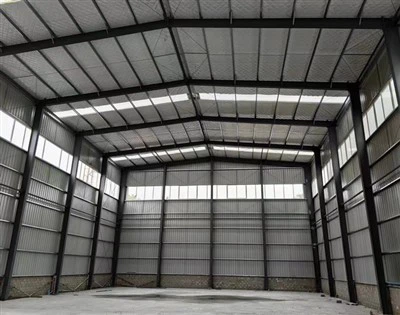
Hey there! As a supplier of prefabricated steel warehouses, I often get asked about the seismic resistance capabilities of these structures. It's a crucial topic, especially in regions prone to earthquakes. So, let's dive right in and explore what makes prefabricated steel warehouses stand up to seismic forces.
Understanding Seismic Forces
First off, we need to understand what seismic forces are. Earthquakes generate ground motion that can cause buildings to shake, tilt, or even collapse. These forces can be horizontal, vertical, or a combination of both. The intensity of seismic forces depends on various factors, such as the magnitude of the earthquake, the distance from the epicenter, and the local soil conditions.


Why Steel is a Great Choice for Seismic Resistance
One of the main reasons prefabricated steel warehouses are a popular choice in earthquake - prone areas is the properties of steel itself. Steel is a ductile material, which means it can deform under stress without breaking. When an earthquake hits, the steel in the warehouse can bend and stretch, absorbing the energy from the seismic waves. This ductility allows the structure to withstand large amounts of movement without collapsing.
Another advantage of steel is its high strength - to - weight ratio. Prefabricated steel warehouses are relatively lightweight compared to traditional concrete or masonry structures. This means that there is less mass for the seismic forces to act on, reducing the overall stress on the building during an earthquake.
Design Features for Seismic Resistance
Our prefabricated steel warehouses are designed with several features to enhance their seismic resistance.
Structural Framing
The structural framing of our steel warehouses is engineered to distribute the seismic forces evenly throughout the structure. We use a combination of columns, beams, and braces to create a rigid yet flexible framework. The columns are designed to support the vertical loads of the building, while the beams and braces help to resist the horizontal forces generated by earthquakes.
Foundation Design
A solid foundation is essential for seismic resistance. Our prefabricated steel warehouses are typically installed on a well - designed foundation that is engineered to transfer the seismic forces from the structure to the ground. The foundation design takes into account the local soil conditions, ensuring that the building remains stable during an earthquake.
Connection Design
The connections between the steel components are also critical for seismic resistance. We use high - strength bolts and welds to ensure that the structural elements are securely connected. These connections are designed to withstand the dynamic forces generated by earthquakes, preventing the structure from coming apart.
Testing and Certification
To ensure the seismic resistance of our prefabricated steel warehouses, we conduct rigorous testing. Our products are designed and built in accordance with international building codes and standards, such as the International Building Code (IBC) and the American Institute of Steel Construction (AISC) standards. These codes provide guidelines for the design, construction, and seismic performance of steel structures.
In addition to following the codes, we also perform in - house testing and simulations to evaluate the seismic performance of our warehouses. This allows us to make any necessary adjustments to the design and construction process to ensure the highest level of seismic resistance.
Real - World Examples
There are many real - world examples of prefabricated steel warehouses that have withstood earthquakes. In areas where seismic activity is common, these structures have proven to be reliable and safe. For instance, in some earthquake - prone regions, prefabricated steel warehouses have remained intact while other types of buildings have suffered significant damage.
Comparing with Other Types of Warehouses
When compared to other types of warehouses, such as concrete or masonry structures, prefabricated steel warehouses have several advantages in terms of seismic resistance. Concrete and masonry are brittle materials, which means they are more likely to crack and fail under seismic forces. In contrast, the ductility of steel allows prefabricated steel warehouses to better absorb and dissipate the energy from earthquakes.
The Role of Prefabrication in Seismic Resistance
Prefabrication plays an important role in ensuring the seismic resistance of our steel warehouses. The components of the warehouse are manufactured in a controlled factory environment, where quality control measures can be strictly enforced. This ensures that each component meets the required standards for seismic resistance.
Additionally, prefabrication allows for faster construction times. This is important in earthquake - prone areas, as it reduces the time that the building is exposed to potential seismic events during the construction process.
Conclusion
In conclusion, prefabricated steel warehouses have excellent seismic resistance capabilities. The properties of steel, combined with proper design and construction techniques, make these structures a reliable choice for areas prone to earthquakes. Whether you're looking for a Prefabricated Warehouse, a Steel Godown, or a Prefabricated Metal Warehouse, our products are designed to provide the highest level of safety and durability.
If you're interested in purchasing a prefabricated steel warehouse, we'd love to have a chat with you. We can discuss your specific needs, provide you with a detailed quote, and answer any questions you may have. Don't hesitate to reach out and start the conversation about your next prefabricated steel warehouse project.
References
- International Building Code (IBC)
- American Institute of Steel Construction (AISC) standards