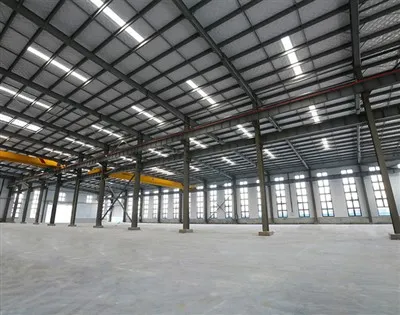
Hey there! As a supplier of pre engineered warehouses, I've seen firsthand how crucial it is to have good air quality in these spaces. Whether you're storing goods, running a business, or using the warehouse for other purposes, poor air quality can lead to all sorts of problems. In this blog, I'm gonna share some tips on how to improve the air quality in a pre engineered warehouse.


1. Ventilation is Key
One of the most important things you can do to improve air quality is to ensure proper ventilation. Pre engineered warehouses are often large, enclosed spaces, and without adequate ventilation, pollutants can build up quickly.
- Natural Ventilation: If possible, design your warehouse to take advantage of natural ventilation. This can be as simple as installing windows or vents that can be opened to allow fresh air to circulate. For example, you can have ridge vents at the top of the warehouse and wall vents at the lower levels. As hot air rises, it will escape through the ridge vents, while fresh air is drawn in through the lower wall vents.
- Mechanical Ventilation: In addition to natural ventilation, mechanical ventilation systems can be very effective. Exhaust fans can be installed to remove stale air and bring in fresh air from outside. You can also use air handling units (AHUs) that filter and condition the air before it enters the warehouse. These systems can help remove dust, pollutants, and odors from the air.
2. Control Dust and Particulates
Dust and particulates are common pollutants in warehouses. They can come from a variety of sources, such as stored goods, construction activities, and vehicle traffic.
- Regular Cleaning: Establish a regular cleaning schedule for your warehouse. Sweep and vacuum the floors frequently to remove dust and debris. Use wet mopping to prevent dust from becoming airborne. Also, clean the shelves and storage areas to prevent dust buildup.
- Dust Collection Systems: Install dust collection systems near sources of dust, such as loading docks, conveyor belts, and machinery. These systems can capture dust particles before they spread throughout the warehouse. For example, a cyclone dust collector can be used to separate dust from the air and collect it in a container.
- Air Filtration: Use high - efficiency air filters in your ventilation systems. These filters can trap small dust particles and other pollutants, improving the overall air quality. Make sure to replace the filters regularly to maintain their effectiveness.
3. Manage Chemicals and Fumes
Warehouses often store chemicals and other substances that can release fumes and pollutants into the air.
- Proper Storage: Store chemicals in a well - ventilated area, preferably in a separate storage room or cabinet. Make sure the storage area is designed to prevent spills and leaks. Follow all safety regulations regarding the storage of hazardous chemicals.
- Fume Extraction: If there are processes in the warehouse that generate fumes, such as painting or welding, install fume extraction systems. These systems can capture the fumes at the source and exhaust them outside the warehouse.
- Use Low - VOC Products: When using cleaning products, paints, and other chemicals in the warehouse, choose products with low volatile organic compounds (VOCs). VOCs can contribute to poor air quality and have negative health effects.
4. Monitor Air Quality
Regularly monitoring the air quality in your warehouse is essential to ensure that the measures you're taking are effective.
- Air Quality Sensors: Install air quality sensors in different areas of the warehouse. These sensors can measure parameters such as temperature, humidity, carbon dioxide levels, and particulate matter. By monitoring these parameters, you can detect any changes in air quality and take appropriate action.
- Professional Testing: Consider having your warehouse air quality professionally tested on a regular basis. A professional testing service can provide detailed information about the pollutants in the air and recommend specific solutions to improve air quality.
5. Employee Training
Your employees play a crucial role in maintaining good air quality in the warehouse.
- Training Programs: Provide training to your employees on the importance of air quality and the proper procedures for handling chemicals, cleaning, and using ventilation systems. Make sure they understand how their actions can impact the air quality in the warehouse.
- Personal Protective Equipment (PPE): Provide appropriate PPE, such as respirators and dust masks, to employees who are exposed to dust, fumes, or other pollutants. Make sure they know how to use the PPE correctly.
Related Buildings
If you're interested in other types of pre engineered buildings, we also offer Chicken Farm Building and Metal Sports Building. And of course, for more information on Steel Warehouse Construction, you can visit our website.
Improving the air quality in a pre engineered warehouse is not only important for the health and well - being of your employees but also for the preservation of your stored goods. By following these tips, you can create a healthier and more productive environment in your warehouse.
If you're in the market for a pre engineered warehouse or need advice on improving air quality in your existing warehouse, don't hesitate to reach out. We're here to help you make the best decisions for your business.
References
- American Society of Heating, Refrigerating and Air - Conditioning Engineers (ASHRAE). (2022). Ventilation for Acceptable Indoor Air Quality.
- Occupational Safety and Health Administration (OSHA). (2023). Hazardous Chemicals in the Workplace.
- Environmental Protection Agency (EPA). (2023). Indoor Air Quality Guidelines.