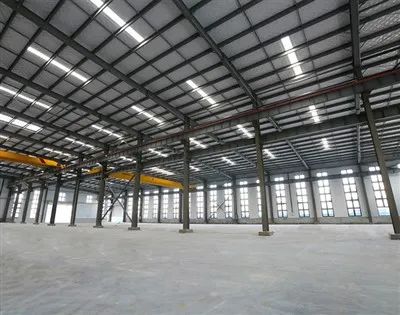
Effective inventory management is crucial for the success of any industrial shed warehouse. As a leading supplier of industrial shed warehouses, I have witnessed firsthand the challenges that businesses face in managing their inventory efficiently. In this blog post, I will share some valuable insights and practical strategies on how to manage inventory in an industrial shed warehouse effectively.
Understanding the Importance of Inventory Management
Inventory management is not just about keeping track of the items stored in a warehouse. It involves a comprehensive approach that encompasses everything from procurement and storage to distribution and sales. Proper inventory management ensures that the right products are available at the right time, in the right quantity, and at the right cost. This not only improves customer satisfaction but also reduces costs associated with overstocking or stockouts.
Conduct a Thorough Inventory Audit
The first step in managing inventory in an industrial shed warehouse is to conduct a thorough inventory audit. This involves counting all the items in the warehouse, verifying their quantities, and comparing them against the inventory records. An inventory audit helps identify discrepancies, such as missing items, overstocked products, or damaged goods. It also provides a baseline for future inventory management activities.
During the audit, it is important to use barcode scanners or inventory management software to streamline the process and improve accuracy. These tools can help track inventory levels in real-time, generate reports, and identify trends.
Categorize Your Inventory
Once you have completed the inventory audit, the next step is to categorize your inventory. This involves grouping items based on their characteristics, such as demand, value, and lead time. Categorizing your inventory helps you prioritize your management efforts and allocate resources more effectively.
One commonly used categorization method is the ABC analysis. This method classifies items into three categories: A, B, and C. Category A items are high-value items that have a high demand and a short lead time. These items typically account for a small percentage of the total inventory but a large percentage of the total value. Category B items are medium-value items that have a moderate demand and a medium lead time. Category C items are low-value items that have a low demand and a long lead time. These items typically account for a large percentage of the total inventory but a small percentage of the total value.
By categorizing your inventory using the ABC analysis, you can focus your attention on the most important items and ensure that they are always in stock. You can also adjust your ordering and stocking strategies based on the category of each item.
Implement a Just-in-Time (JIT) Inventory System
A just-in-time (JIT) inventory system is a strategy that involves ordering and receiving inventory just in time to meet customer demand. This system helps reduce inventory holding costs, minimize the risk of overstocking, and improve cash flow.


To implement a JIT inventory system, you need to have a good understanding of your customer demand patterns and lead times. You also need to establish strong relationships with your suppliers to ensure that they can deliver the required items on time.
In addition to reducing inventory holding costs, a JIT inventory system can also improve quality control. By receiving inventory just in time, you can minimize the amount of time that items are stored in the warehouse, which reduces the risk of damage and deterioration.
Use Inventory Management Software
Inventory management software is a powerful tool that can help you streamline your inventory management processes and improve efficiency. This software can help you track inventory levels in real-time, generate reports, and automate tasks such as ordering and reordering.
When choosing inventory management software, it is important to consider your specific needs and requirements. Look for software that is easy to use, scalable, and integrates with your existing systems. You should also consider the cost of the software and the level of support provided by the vendor.
Optimize Your Warehouse Layout
The layout of your industrial shed warehouse can have a significant impact on your inventory management efficiency. A well-designed warehouse layout can help reduce the time and effort required to pick and pack items, improve inventory accuracy, and increase productivity.
When designing your warehouse layout, consider factors such as the size and shape of your inventory, the flow of goods through the warehouse, and the accessibility of storage areas. You should also consider the use of automation and technology, such as conveyor belts, pallet racks, and automated storage and retrieval systems (AS/RS), to improve efficiency and productivity.
Train Your Staff
Effective inventory management requires the cooperation and support of your staff. It is important to train your staff on the importance of inventory management, the proper use of inventory management tools and software, and the procedures for handling inventory.
Provide your staff with regular training and development opportunities to keep them up-to-date on the latest inventory management techniques and best practices. Encourage them to provide feedback and suggestions for improving the inventory management processes.
Monitor and Analyze Your Inventory Performance
Monitoring and analyzing your inventory performance is essential for continuous improvement. Regularly review your inventory turnover ratio, days of inventory on hand, and stockout rate to identify areas for improvement. Use this data to make informed decisions about your inventory management strategies, such as adjusting your reorder points, increasing or decreasing your inventory levels, or changing your suppliers.
Seek Professional Help
If you are struggling to manage your inventory effectively, consider seeking professional help. There are many consultants and service providers who specialize in inventory management and can provide you with expert advice and support.
A professional inventory management consultant can help you assess your current inventory management practices, identify areas for improvement, and develop a customized inventory management strategy that meets your specific needs and requirements.
Conclusion
Managing inventory in an industrial shed warehouse is a complex and challenging task. However, by following the strategies outlined in this blog post, you can improve your inventory management efficiency, reduce costs, and increase customer satisfaction.
As a supplier of industrial shed warehouses, I am committed to helping my customers manage their inventory effectively. If you are interested in learning more about our products and services, or if you have any questions or concerns about inventory management, please visit our website Prefabricated Storage Shed, Car Parking Building, 2 Story Warehouse or contact us to schedule a consultation.
References
- APICS Dictionary, 16th edition.
- Inventory Management Handbook, by Edward A. Silver, David F. Pyke, and Rein Peterson.
- Operations and Supply Chain Management, by Jay Heizer, Barry Render, and Chuck Munson.