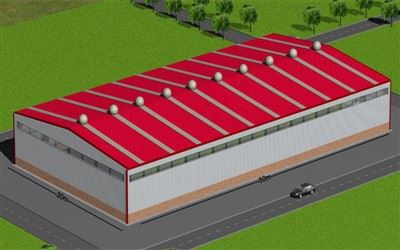
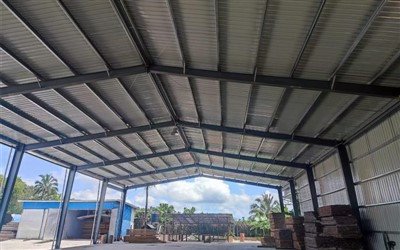
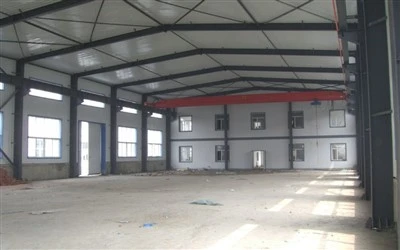
In the realm of modern architecture, steel frame buildings have emerged as a popular choice due to their strength, durability, and flexibility in design. As a leading supplier of Modern Steel Frame Buildings, we understand the importance of addressing thermal bridging in the design process. Thermal bridging can significantly impact a building's energy efficiency, comfort, and long - term performance. In this blog post, we will explore how the design of modern steel frame buildings considers thermal bridging.
Understanding Thermal Bridging
Thermal bridging occurs when there is a direct path for heat to transfer through a building's envelope, bypassing the insulation. Steel, being a highly conductive material, can act as a thermal bridge in steel frame buildings. When heat flows through these bridges, it can lead to increased energy consumption for heating and cooling, as well as potential issues such as condensation and mold growth on the interior surfaces.


Design Strategies to Mitigate Thermal Bridging
Insulation Placement
One of the primary ways to address thermal bridging in modern steel frame buildings is through strategic insulation placement. Insulation should be installed in a continuous layer around the building envelope to minimize heat transfer through the steel frames. For example, exterior insulation finishing systems (EIFS) can be used to create a seamless thermal barrier. These systems consist of a layer of insulation board attached to the exterior of the steel frame, followed by a protective finish. By covering the steel frames with insulation, the heat transfer through the steel is reduced, thus mitigating thermal bridging.
Another approach is to use cavity insulation. In this method, insulation is placed within the cavities between the steel studs. However, it is crucial to ensure that the insulation is properly installed and fills the cavities completely to prevent air gaps, which can also contribute to thermal bridging.
Thermal Breaks
Thermal breaks are materials or components that are inserted between the steel members to interrupt the heat flow. These breaks are typically made of insulating materials such as plastic, rubber, or foam. For instance, in a steel frame wall, a thermal break can be installed between the steel studs and the exterior cladding. This break acts as a barrier, reducing the heat transfer from the exterior to the interior through the steel.
In multi - storey steel frame buildings, thermal breaks can also be used at the connections between different structural elements. For example, at the joints between columns and beams, a thermal break can be incorporated to prevent heat from flowing directly through the steel connections. This is especially important in Multi Storey Steel Structure Building where the vertical and horizontal load - bearing elements are interconnected.
Design of Steel Sections
The design of steel sections can also play a role in reducing thermal bridging. By using optimized steel section shapes, the surface area of the steel in contact with the exterior and interior environments can be minimized. For example, using hollow steel sections instead of solid ones can reduce the amount of steel exposed to the temperature difference, thus reducing heat transfer.
Additionally, the orientation and spacing of steel members can be carefully planned. By increasing the spacing between steel studs, the overall area of the thermal bridge is reduced. However, this must be balanced with the structural requirements of the building to ensure its stability.
Impact on Energy Efficiency
Addressing thermal bridging in the design of modern steel frame buildings has a significant impact on energy efficiency. By reducing heat transfer through the building envelope, less energy is required for heating in the winter and cooling in the summer. This not only reduces the building's operating costs but also contributes to a more sustainable environment.
For example, a well - designed steel frame building with effective thermal bridging mitigation can achieve significant energy savings compared to a building where thermal bridging is not properly addressed. These savings can translate into lower utility bills for the building owners and a reduced carbon footprint.
Comfort and Indoor Air Quality
Thermal bridging can also affect the comfort and indoor air quality of a building. When heat is lost through thermal bridges, it can create cold spots on the interior surfaces, leading to discomfort for the occupants. Additionally, condensation can occur on these cold surfaces, which can promote the growth of mold and mildew, posing a health risk to the occupants.
By designing modern steel frame buildings to minimize thermal bridging, we can ensure a more consistent indoor temperature and reduce the risk of condensation. This creates a more comfortable and healthy living or working environment for the building's occupants.
Case Studies
Let's look at some real - world examples of how modern steel frame buildings have successfully addressed thermal bridging. In a recent Prefab Steel Commercial Buildings Residential project, the designers used a combination of exterior insulation and thermal breaks. The exterior insulation was installed as a continuous layer, covering the steel frames completely. Thermal breaks were also incorporated at the connections between the steel members. As a result, the building achieved a high level of energy efficiency and provided a comfortable living environment for the residents.
In another multi - storey steel structure building project, the design team optimized the steel section shapes and increased the spacing between the steel studs. This reduced the thermal bridging effect and improved the overall energy performance of the building. The building also met the strict energy efficiency standards set by local authorities.
Future Trends
As the demand for energy - efficient and sustainable buildings continues to grow, the design of modern steel frame buildings will likely see further advancements in thermal bridging mitigation. New materials and technologies are being developed to provide better insulation and more effective thermal breaks. For example, nanotechnology - based insulation materials may offer even higher levels of thermal resistance in the future.
In addition, building information modeling (BIM) technology is becoming increasingly important in the design process. BIM allows designers to simulate the thermal performance of a building and identify potential thermal bridging issues early in the design phase. This enables them to make informed decisions and optimize the design to minimize thermal bridging.
Conclusion
In conclusion, the design of modern steel frame buildings must carefully consider thermal bridging to ensure energy efficiency, comfort, and long - term performance. Through strategies such as insulation placement, thermal breaks, and optimized steel section design, we can effectively mitigate the effects of thermal bridging. As a supplier of Modern Steel Frame Buildings, we are committed to providing high - quality solutions that address these important design considerations.
If you are interested in learning more about our modern steel frame building solutions or would like to discuss a project, we invite you to reach out to us for a procurement consultation. Our team of experts is ready to assist you in creating a building that meets your needs while also being energy - efficient and sustainable.
References
ASHRAE. (2019). ASHRAE Handbook - Fundamentals. American Society of Heating, Refrigerating and Air - Conditioning Engineers.
Kreider, J. F., Rabl, A., & Claridge, D. E. (2009). Heating and Cooling of Buildings: Principles and Practice of Energy Efficient Design. Wiley.