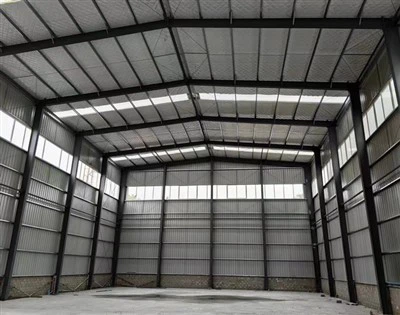
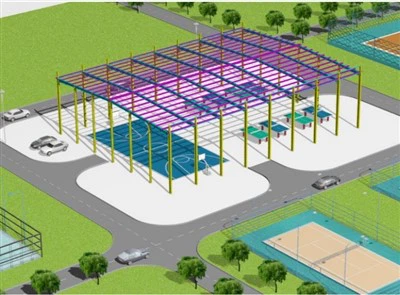
Hey there, fellow construction enthusiasts! I'm part of a Steel Frame Office Building supplier, and I've seen firsthand how crucial proper alignment of steel frames is during construction. It's not just about making things look good; it's about ensuring the safety, stability, and longevity of the entire building. In this blog, I'll share some tips and tricks on how to ensure that steel frames are properly aligned throughout the construction process.
Understanding the Basics of Steel Frame Alignment
Before we dive into the nitty - gritty of alignment, let's understand why it's so important. Steel frames serve as the backbone of an office building. If they're not aligned correctly, it can lead to a whole host of problems. Uneven stress distribution can cause premature wear and tear on the structure, and in the worst - case scenario, it can even compromise the building's integrity.
The alignment process starts right from the foundation. A well - laid foundation is essential for proper steel frame alignment. The foundation should be level and strong enough to support the weight of the steel frames. Any unevenness in the foundation can throw off the entire alignment of the steel frames.
Pre - Construction Planning
One of the first steps in ensuring proper alignment is thorough pre - construction planning. This involves creating detailed blueprints that specify the exact dimensions and angles of each steel frame component. These blueprints act as a roadmap for the construction team.
We at our company offer Multipurpose Prefab Metal Office Buildings and Versatile Steel Structure Office Building, and for each project, we work closely with architects and engineers to develop these precise blueprints. We use advanced 3D modeling software to visualize the entire building and ensure that all the steel frame components fit together perfectly.
Another important aspect of pre - construction planning is site surveying. A professional surveyor should measure the site to determine its topography and elevation. This information is crucial for placing the foundation and ensuring that the steel frames are aligned with the natural contours of the land.
Quality Control of Steel Frame Components
The quality of the steel frame components themselves plays a big role in alignment. We only source high - quality steel from trusted suppliers. Each component is inspected for any defects, such as warping or bending, before it's used in construction.
If a steel frame component is slightly out of shape, it can cause alignment issues. For example, a beam that's bent even by a small amount can make it difficult to connect it properly to other components, leading to misalignment. That's why we have a strict quality control process in place to catch any problems early on.
Installation Techniques
When it comes to installing steel frames, there are several techniques that can help ensure proper alignment. One of the most common methods is using alignment tools. Laser levels are extremely useful for ensuring that the steel frames are perfectly vertical and horizontal. They project a straight line of light that can be used as a reference point during installation.
We also use plumb bobs to check the vertical alignment of columns. A plumb bob is a weight attached to a string, and when it's suspended from a column, it shows the true vertical line. This helps the construction team make sure that the columns are standing straight.


During the installation process, it's important to connect the steel frame components in the correct order. Each connection point should be tightened properly using the right bolts and nuts. Loose connections can cause the frames to shift out of alignment over time.
Monitoring and Adjustment
Alignment is not a one - time thing. It needs to be monitored throughout the construction process. As the building progresses, the weight of the additional components and materials can cause the steel frames to shift slightly. That's why regular inspections are necessary.
We use a combination of visual inspections and advanced measurement tools to monitor the alignment. If any misalignment is detected, adjustments need to be made immediately. This might involve loosening and re - tightening connections or using shims to correct small gaps.
Dealing with Environmental Factors
Environmental factors can also affect the alignment of steel frames. Temperature changes can cause the steel to expand or contract. For example, on a hot day, the steel frames may expand slightly, and on a cold day, they may contract.
To deal with these temperature - related changes, we design the steel frames with some flexibility in mind. Expansion joints are often incorporated into the design to allow the steel to expand and contract without causing misalignment.
Wind and seismic activity can also put stress on the steel frames. In areas prone to high winds or earthquakes, we use additional bracing and reinforcement to ensure that the frames stay in alignment even under extreme conditions.
Post - Construction Checks
Once the construction is complete, a final alignment check is essential. This is to make sure that the building meets all the required standards and specifications. We conduct a comprehensive inspection using a variety of methods, including laser scanning and structural analysis.
If any alignment issues are found at this stage, they need to be addressed before the building is occupied. This might involve minor adjustments or, in rare cases, more extensive repairs.
Conclusion
Proper alignment of steel frames during construction is a complex but essential process. It requires careful planning, high - quality materials, skilled labor, and continuous monitoring. As a Steel Frame Office Building supplier, we take pride in our ability to ensure that every project we're involved in has properly aligned steel frames.
If you're in the market for a steel frame office building, we'd love to have a chat with you. Whether you're looking for a multipurpose prefab metal office building or a versatile steel structure office building, we have the expertise and experience to meet your needs. Reach out to us to start the conversation about your next project.
References
- Construction Management Association of America. "Best Practices for Steel Frame Construction."
- American Institute of Steel Construction. "Steel Construction Manual."
- National Fire Protection Association. "Building Codes Related to Steel Frame Structures."