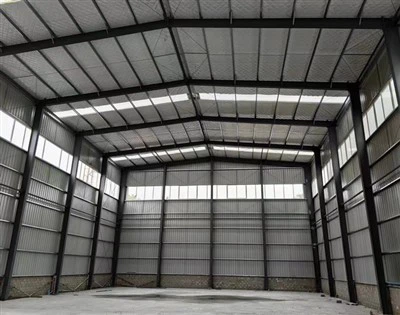
As a supplier of prebuilt warehouses, I often get asked about the crucial process of anchoring these structures to the ground. Proper anchoring is not just a technicality; it's a fundamental step that ensures the safety, stability, and longevity of the prebuilt warehouse. In this blog, I'll share some in - depth knowledge about how to anchor a prebuilt warehouse to the ground.
Understanding the Importance of Anchoring
Before delving into the anchoring methods, it's essential to understand why anchoring is so important. A prebuilt warehouse, especially a large - scale one, is subject to various external forces. Wind, seismic activity, and even the weight of stored goods can exert significant stress on the structure. Without proper anchoring, the warehouse could shift, tilt, or even collapse during extreme weather conditions or seismic events.
Anchoring also helps in maintaining the structural integrity of the warehouse. It distributes the load evenly across the foundation, preventing excessive stress on any single part of the structure. This, in turn, reduces the risk of damage and extends the lifespan of the warehouse.
Types of Anchoring Systems
There are several types of anchoring systems available, and the choice depends on various factors such as the type of soil, the size and weight of the warehouse, and the local building codes.
Concrete Anchors
Concrete anchors are one of the most common types of anchoring systems for prebuilt warehouses. They work by embedding a metal anchor into the concrete foundation. There are different types of concrete anchors, including expansion anchors, chemical anchors, and wedge anchors.
Expansion anchors are installed by drilling a hole in the concrete, inserting the anchor, and then tightening it. As the anchor is tightened, it expands, creating a secure hold in the concrete. Chemical anchors, on the other hand, use a chemical adhesive to bond the anchor to the concrete. This type of anchor provides a very strong and reliable connection. Wedge anchors are similar to expansion anchors but use a wedge mechanism to create a tight fit in the concrete.
Helical Piles
Helical piles are another popular option for anchoring prebuilt warehouses, especially in areas with soft or unstable soil. These piles are screw - like structures that are twisted into the ground. They provide excellent load - bearing capacity and can be installed relatively quickly. Helical piles are also adjustable, which means they can be used to level the warehouse if the ground is uneven.
Anchor Bolts
Anchor bolts are used to connect the warehouse frame to the foundation. They are typically made of steel and are embedded in the concrete during the foundation construction. Anchor bolts come in different sizes and shapes, and the choice depends on the specific requirements of the warehouse. They provide a strong and rigid connection between the structure and the foundation.
Site Preparation
Proper site preparation is crucial before anchoring a prebuilt warehouse. The first step is to conduct a thorough soil analysis. This analysis will determine the type of soil, its bearing capacity, and any potential issues such as soil settlement or instability. Based on the soil analysis, the appropriate anchoring system can be selected.
The site should also be leveled and graded to ensure a flat and stable surface for the warehouse. Any debris, rocks, or vegetation should be removed from the site. If the soil is soft or unstable, additional measures such as soil compaction or the installation of a gravel base may be required.
Installation Process
The installation process of the anchoring system is a critical step. It should be carried out by experienced professionals who are familiar with the specific requirements of the prebuilt warehouse.
For concrete anchors, the first step is to drill the holes in the concrete foundation according to the manufacturer's specifications. The holes should be clean and free of debris. The anchors are then inserted into the holes and tightened to the appropriate torque.
When installing helical piles, a specialized drill rig is used to twist the piles into the ground. The piles are installed to a specific depth and torque to ensure they provide the required load - bearing capacity. Once the piles are installed, the warehouse frame is attached to the piles using appropriate connectors.
For anchor bolts, they are placed in the concrete formwork during the foundation construction. The bolts are positioned according to the layout of the warehouse frame. After the concrete has cured, the warehouse frame is bolted to the anchor bolts.
Quality Control and Inspection
Quality control and inspection are essential to ensure that the anchoring system is installed correctly. During the installation process, regular inspections should be carried out to check the alignment, torque, and overall quality of the installation.


After the installation is complete, a final inspection should be conducted by a qualified engineer or inspector. The inspector will check the integrity of the anchoring system, the connection between the warehouse frame and the foundation, and the overall stability of the structure. Any issues or deficiencies should be addressed immediately to ensure the safety and reliability of the prebuilt warehouse.
Maintenance and Monitoring
Once the prebuilt warehouse is anchored and in use, regular maintenance and monitoring are required. The anchoring system should be inspected periodically for signs of damage, corrosion, or loosening. Any issues should be addressed promptly to prevent further damage to the structure.
Monitoring the warehouse for any signs of movement or settlement is also important. This can be done using various methods such as installing inclinometers or conducting regular surveys. If any movement or settlement is detected, the cause should be investigated, and appropriate measures should be taken to correct the problem.
Conclusion
Anchoring a prebuilt warehouse to the ground is a complex but essential process. By understanding the importance of anchoring, choosing the right anchoring system, and following proper installation, quality control, and maintenance procedures, you can ensure the safety, stability, and longevity of your prebuilt warehouse.
If you are in the market for a Prefabricated Steel Warehouse, we are here to assist you. Our team of experts can help you choose the right anchoring system for your specific needs and ensure a smooth installation process. Contact us today to start the conversation about your prebuilt warehouse project.
References
- "Building Construction Handbook" by Edwin T. Heizer
- "Structural Engineering for Non - Structural Engineers" by S. Ramachandran